
Free Walk-Through Gate Offer!
Expert Guide to New Fencing Installation: Tips and Best Practices
Understanding Your Fencing Needs Before Installation
Before any fencing project begins, property owners across Texas must evaluate several critical factors that directly impact material choice, design, and installation approach. The purpose of your fence determines nearly every subsequent decision. Security fencing for commercial properties demands different specifications than decorative boundaries for residential yards. Ranch and farm properties require durability and visibility across expansive acreage, while pool fencing must meet strict safety codes and height requirements.
Budget considerations extend beyond initial installation costs. While chain link fencing offers an economical entry point, wrought iron and aluminum options provide long-term value through minimal maintenance requirements and superior longevity in harsh climates. Property owners should calculate total cost of ownership over 15 to 20 years rather than focusing solely on upfront expenses. This perspective often shifts material selection toward higher-quality metals that withstand Texas weather conditions without frequent repairs or replacement.
Local regulations and homeowner association guidelines play a decisive role in fence design and placement. Height restrictions, setback requirements, and approved materials vary significantly across municipalities in the Poteet area and surrounding communities. Securing proper permits before installation prevents costly modifications and legal complications. Many property owners benefit from working with contractors who understand local codes and maintain established relationships with permitting offices, streamlining the approval process and ensuring compliance from the project’s inception.
Site conditions also influence material and installation methods. Soil composition affects post stability, particularly in areas with clay-heavy ground that expands and contracts with moisture changes. Properties with elevation changes require specialized grading and post placement to maintain consistent fence height and structural integrity. Underground utilities must be located and marked before any digging begins, protecting both the installation crew and essential infrastructure. These preparatory steps, though time-intensive, prevent installation delays and ensure the finished fence performs as intended for decades.
Wrought Iron Versus Aluminum: Material Comparison Guide
The choice between wrought iron and aluminum fencing represents one of the most common decisions facing Texas property owners, and each material offers distinct advantages depending on project requirements. Wrought iron delivers unmatched strength and classic aesthetic appeal. Its substantial weight and dense composition make it the preferred choice for security applications where physical deterrence matters. The material accepts custom designs beautifully, allowing fabricators to create intricate scrollwork, decorative panels, and personalized elements that reflect property character and owner preferences.
Authentic wrought iron requires protective coatings and periodic maintenance to prevent rust formation, particularly in humid climates or areas with frequent rain. Property owners must budget for repainting or powder coating every five to seven years to maintain appearance and structural integrity. Despite this maintenance requirement, many choose wrought iron for its timeless appearance and the substantial, permanent feel it brings to property boundaries. The material’s weight also provides excellent wind resistance, an important consideration during severe weather events common across central and south Texas.
Aluminum fencing offers a compelling alternative that mimics wrought iron’s appearance while eliminating rust concerns entirely. Modern manufacturing techniques produce aluminum fencing with similar profiles and decorative elements, making visual distinction difficult from even short distances. The material’s natural corrosion resistance means it maintains appearance for decades without painting or special treatments. This low-maintenance characteristic appeals to property owners seeking quality fencing without ongoing upkeep commitments.
Weight differences between the materials affect installation approaches and structural requirements. Aluminum’s lighter profile allows for simpler installation with less substantial posts and foundations, potentially reducing project costs. However, this same characteristic makes aluminum more susceptible to impact damage and provides less physical security than wrought iron. For decorative applications, pool fencing, and residential boundaries where appearance and maintenance matter more than maximum security, aluminum frequently represents the optimal choice. Security installations, commercial properties, and locations requiring maximum durability typically benefit from wrought iron’s superior strength despite its higher maintenance demands.
Selecting Fencing Solutions for Ranch and Farm Properties
Ranch and farm properties present unique fencing challenges that differ substantially from residential applications. These installations must contain livestock, define property boundaries across extensive acreage, and withstand constant exposure to elements without frequent maintenance. Material selection for agricultural properties balances durability, visibility, cost per linear foot, and livestock safety. While traditional barbed wire remains common for cattle operations, many ranch owners now incorporate metal pipe fencing or specialized ranch rail systems that provide superior visibility and eliminate injury risks associated with barbed materials.
Pipe fencing constructed from galvanized steel tubing offers exceptional strength and longevity for ranch applications. The material withstands impact from large animals, resists corrosion even in humid conditions, and maintains structural integrity for decades with minimal maintenance. Visibility represents a crucial advantage over wire fencing, allowing both livestock and humans to clearly identify boundaries and prevent accidental collisions. This visibility factor significantly reduces injury rates and associated veterinary costs, offsetting the higher initial investment over time.
Height and rail spacing must be calibrated to the specific livestock contained. Horse properties typically require taller fencing with closer rail spacing than cattle operations, preventing animals from attempting to jump or squeeze through openings. Deer fencing for properties managing wild populations demands even greater height, often reaching eight feet to effectively discourage jumping. Custom fabrication capabilities allow contractors to modify standard designs for specific property requirements, ensuring fencing performs its intended function rather than forcing property owners to compromise with off-the-shelf solutions.
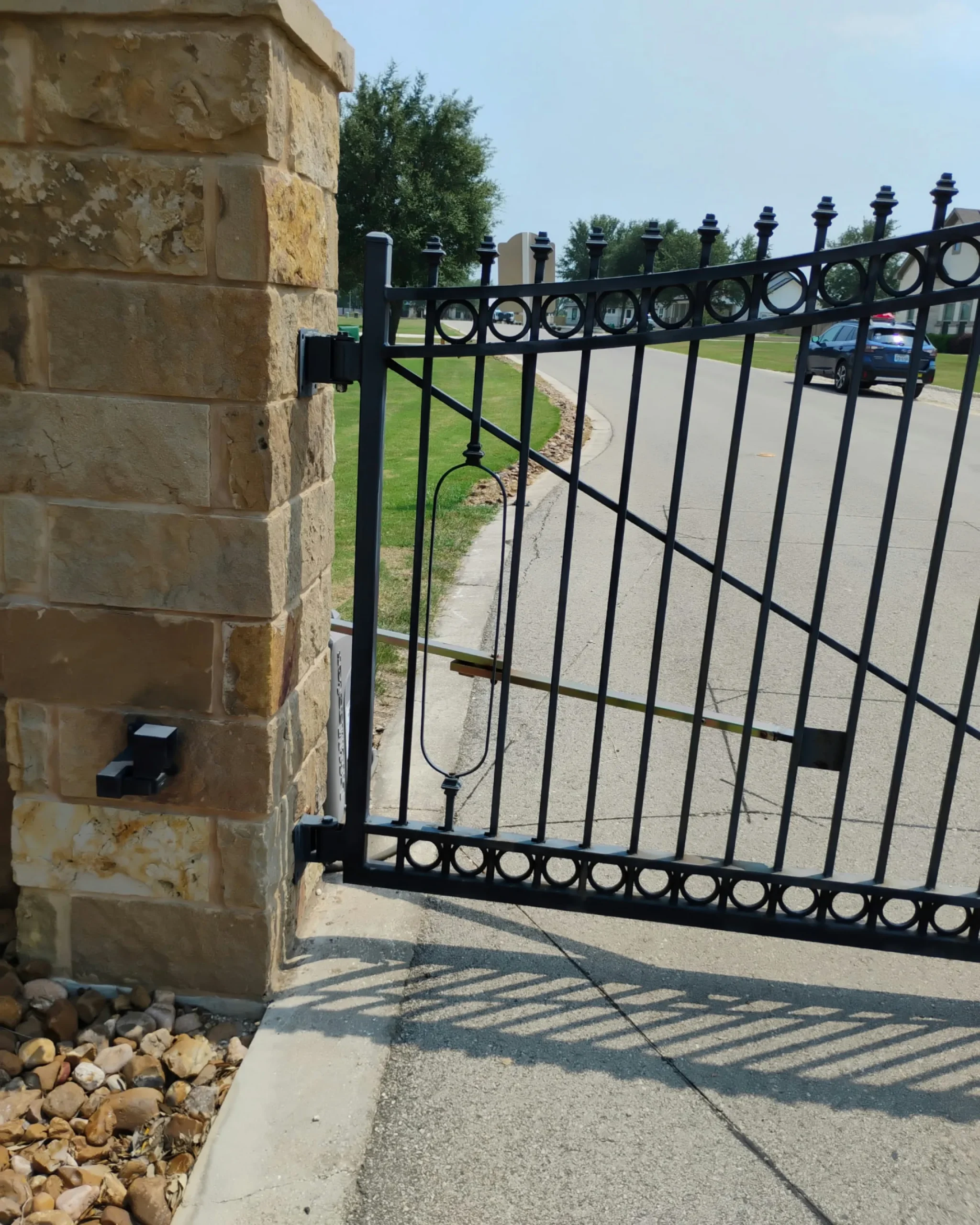
Entry gates for ranch properties require special consideration due to width requirements for equipment passage and frequency of use. Automatic gate systems with robust operators designed for heavy agricultural gates reduce wear on hinges and latches while improving convenience for daily operations. Many ranch owners install both primary vehicle gates and smaller pedestrian gates, minimizing the need to open large spans for routine access. Proper gate design and professional installation prevent sagging, misalignment, and premature failure, common problems when gates lack adequate structural support or use residential-grade hardware for agricultural applications.
How Extreme Heat Impacts Metal Fencing Performance
Texas heat presents one of the most demanding environmental challenges for metal fencing, with summer temperatures regularly exceeding 100 degrees Fahrenheit for extended periods. Metal expands when heated and contracts as temperatures drop, creating cyclical stress on connections, welds, and fasteners. This thermal movement, though measured in fractions of inches, accumulates over fence spans and can cause loosening of components, stress cracks at weld points, and gradual misalignment if not properly accounted for during installation.
Professional installation techniques incorporate expansion considerations through proper spacing, flexible mounting points, and welding methods that accommodate movement without compromising structural integrity. Posts set in concrete must extend below the frost line despite Texas’s mild winters because thermal cycling affects stability even in warm climates. Contractors experienced with local conditions understand these requirements and build them into installation procedures, preventing problems that emerge months or years after completion when thermal stress reveals installation shortcuts.
Coating selection dramatically affects how metal fencing withstands intense UV exposure and heat. Standard paint finishes deteriorate rapidly under Texas sun, fading within two to three years and requiring frequent maintenance to prevent rust formation on underlying metal. Powder coating provides superior protection through a thicker, more durable finish that bonds chemically with metal surfaces. Quality powder coating maintains appearance and protective properties for 15 years or more, even under constant sun exposure. Color choice also matters, as darker finishes absorb more heat and may become uncomfortable to touch during peak summer months, a consideration for pool fencing and areas with frequent human contact.
Heat affects not just the fence itself but also automatic gate operators and electronic access control systems. Components designed for moderate climates may fail prematurely when subjected to sustained high temperatures. Operators installed in direct sun exposure benefit from shading structures or heat-resistant housings that prevent internal temperatures from exceeding equipment specifications. Regular maintenance of automatic systems becomes particularly important in hot climates, with lubrication of moving parts and inspection of electrical connections preventing heat-related failures during the high-use summer season when gate systems receive their heaviest workout.
Professional Installation: Process, Timeline, and Quality Markers
Professional fence installation follows a systematic process that ensures structural integrity, aesthetic consistency, and long-term performance. The project begins with accurate property measurement and design consultation where contractors assess site conditions, discuss material options, and develop detailed plans that address the property owner’s functional and aesthetic requirements. This planning phase includes permit acquisition, utility location, and timeline development that sets realistic expectations for project completion.
Site preparation involves marking fence lines, clearing vegetation, and establishing level references that guide post placement. Professional installers use laser levels and string lines to maintain consistent height and alignment across the entire installation, preventing the wavy, irregular appearance that characterizes amateur work. Post placement represents the most critical phase because everything that follows depends on these foundation elements. Posts must be set at proper depth with adequate concrete footer dimensions to resist wind loads, gate stress, and thermal movement over decades of service.
Quality installations allow concrete to cure fully before attaching fence panels or rails, typically requiring 48 to 72 hours depending on weather conditions. Rushing this step compromises post stability and leads to gradual settling or leaning that becomes apparent within the first year. Once posts are secure, panel or rail installation proceeds with careful attention to spacing, level, and secure fastening. Professional welders create clean, consistent welds that provide full strength without excessive material buildup or weak spots. All connections receive inspection before protective coatings are applied or touch-up painting addresses any installation marks.
Timeline expectations for professional installation vary with project scope, but typical residential fence projects spanning 100 to 300 linear feet require three to five working days from site preparation through final cleanup. Ranch installations covering extensive acreage may span several weeks, with work proceeding in manageable sections. Weather delays, permit processing, and material delivery schedules affect timelines, making communication between contractor and property owner essential for managing expectations. Upon completion, quality contractors provide maintenance guidance, warranty information, and contact details for future service needs, ensuring property owners understand how to protect their investment and whom to contact if questions arise. This professional approach to installation, from initial consultation through post-completion support, distinguishes contractors who build lasting customer relationships from those focused solely on completing the immediate transaction.
